‘Bluey’ Is Virginia’s Vibrant New Star
By Jerald Council, CouncilMag.com
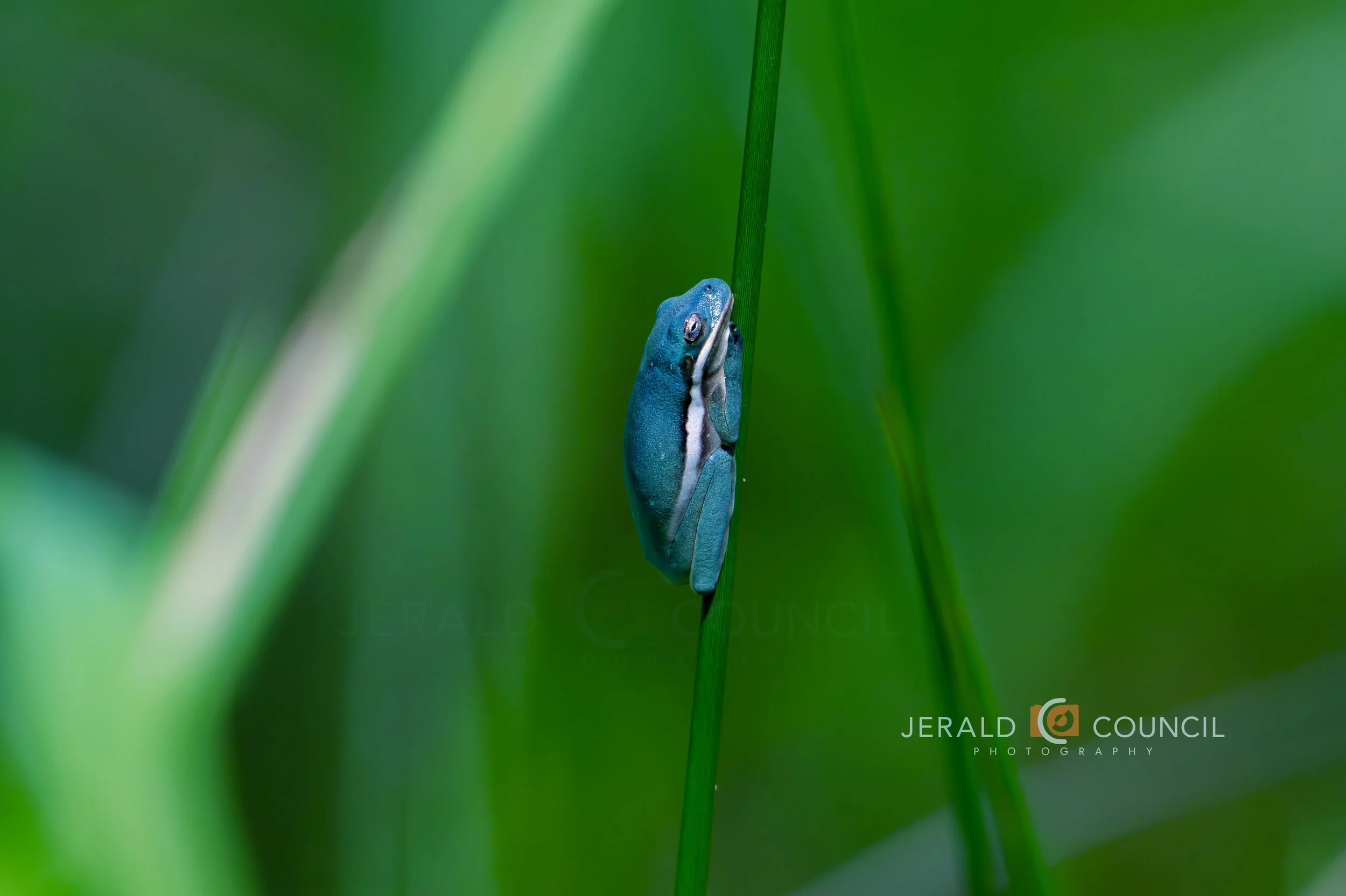
I had the privilege of capturing an exceptional natural phenomenon. In light of the recent interest generated by the sighting of ‘Bluey,’ a rare blue American green tree frog at Huntley Meadows Park in Fairfax, Virginia, I've decided to dedicate this month’s feature to frogs.
Various angles of “Bluey” photographed in its natural habitat.
I just happened to be at the park when Bluey was first spotted. He was a bit larger than a quarter and appeared asleep while attached to a branch in the dense marsh. Using my Nikon camera with a 600mm telephoto lens, I rushed to photograph this rare creature before he disappeared. The frog’s blue color comes from a rare genetic mutation called axanthism, which prevents the animal from producing yellow pigment.
Such a sighting has occurred only a few times worldwide. Recent observations include a fifth-grade student in Sendai, Japan, who discovered a rare blue Japanese tree frog measuring just 1 centimeter in a vacant lot. Another sighting was reported in Australia's Kimberley Region, where experts indicated it was probably the first documented instance of axanthism in that species.
“Frogs start as eggs, hatch into swimming tadpoles with gills and then grow legs and lungs to become adult frogs.”
A young green tree frog on plant at Huntley Meadows Park in Virginia.
Lush grass and wetland plants serve as natural camouflage for green tree frogs.
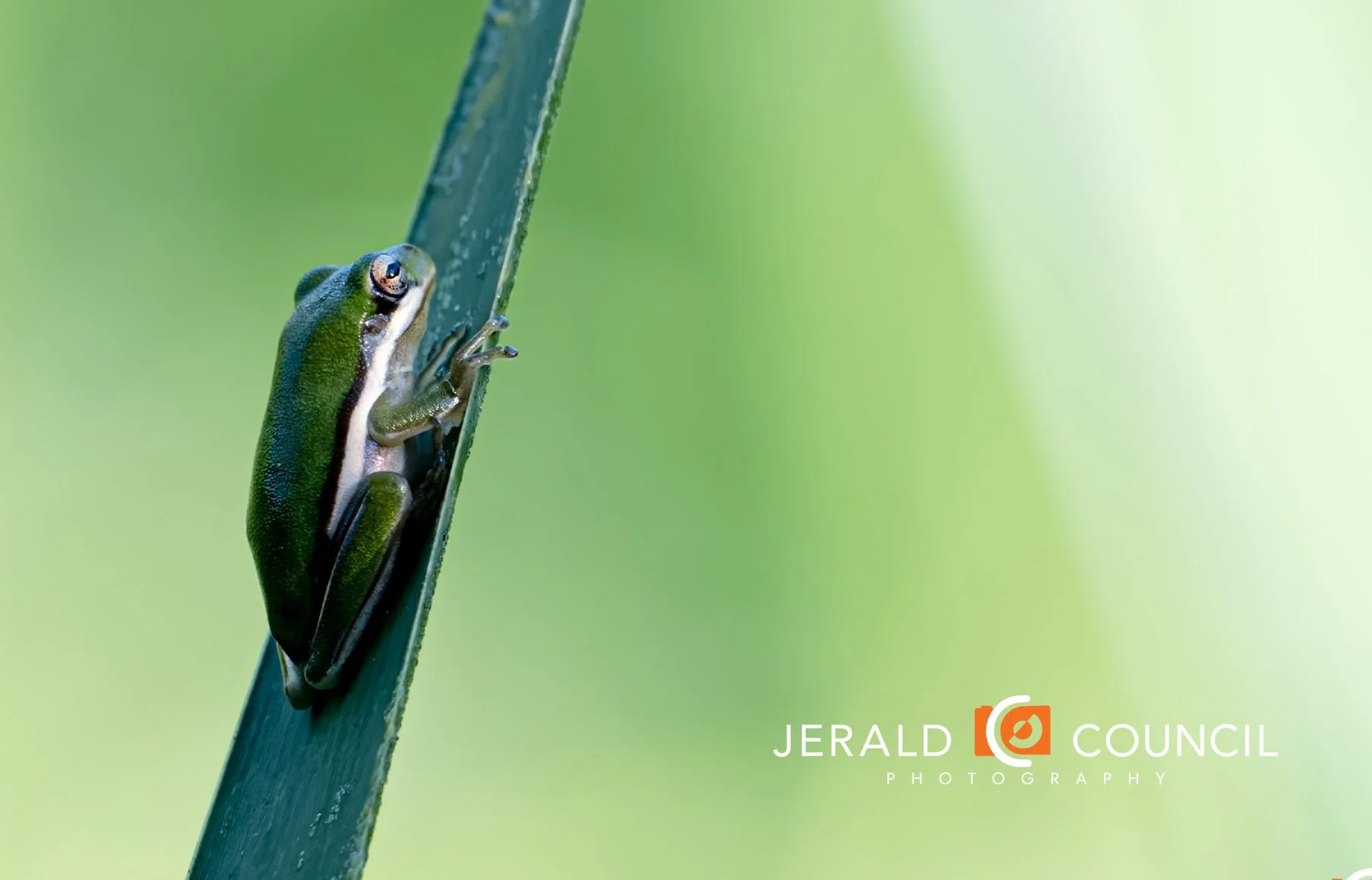
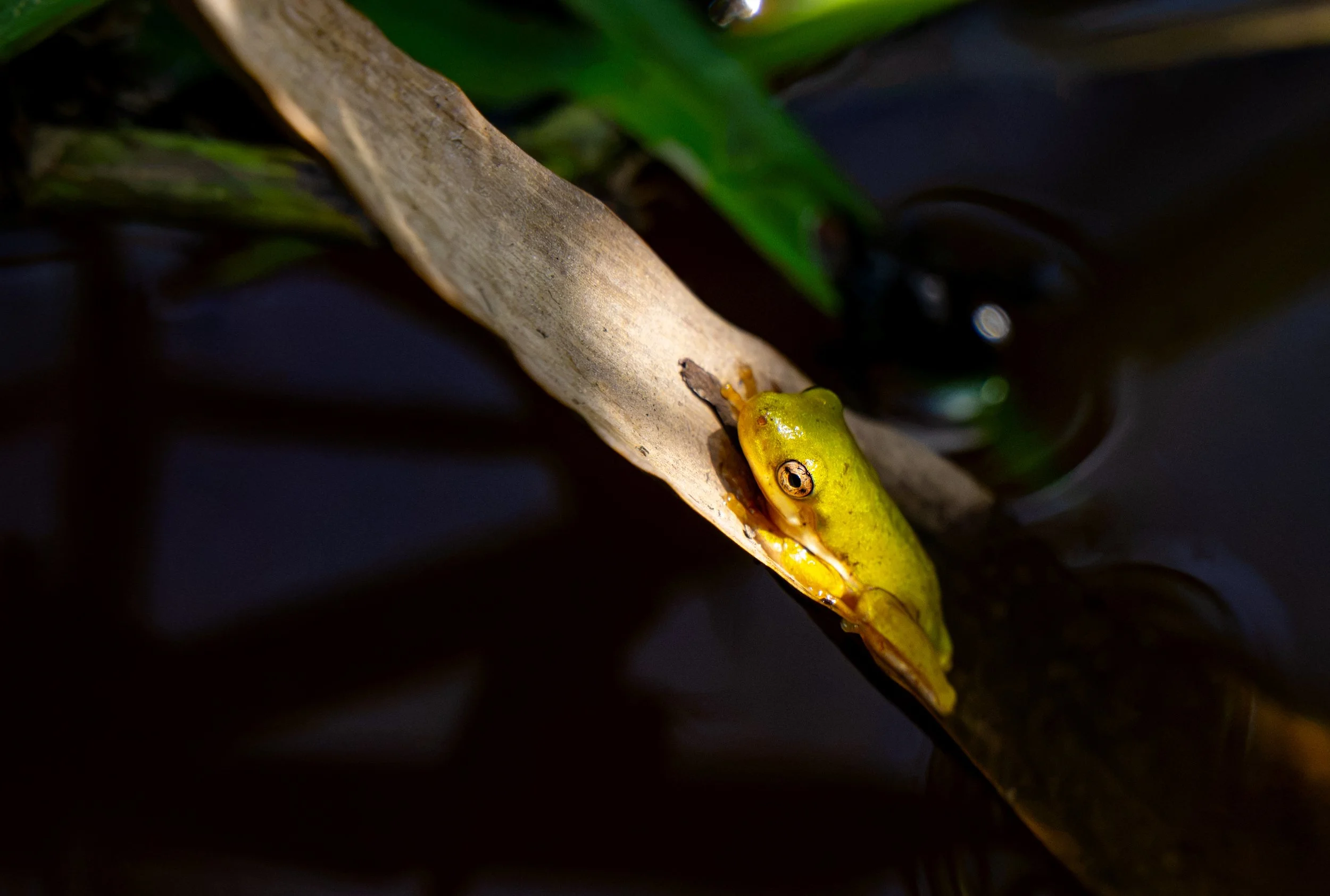
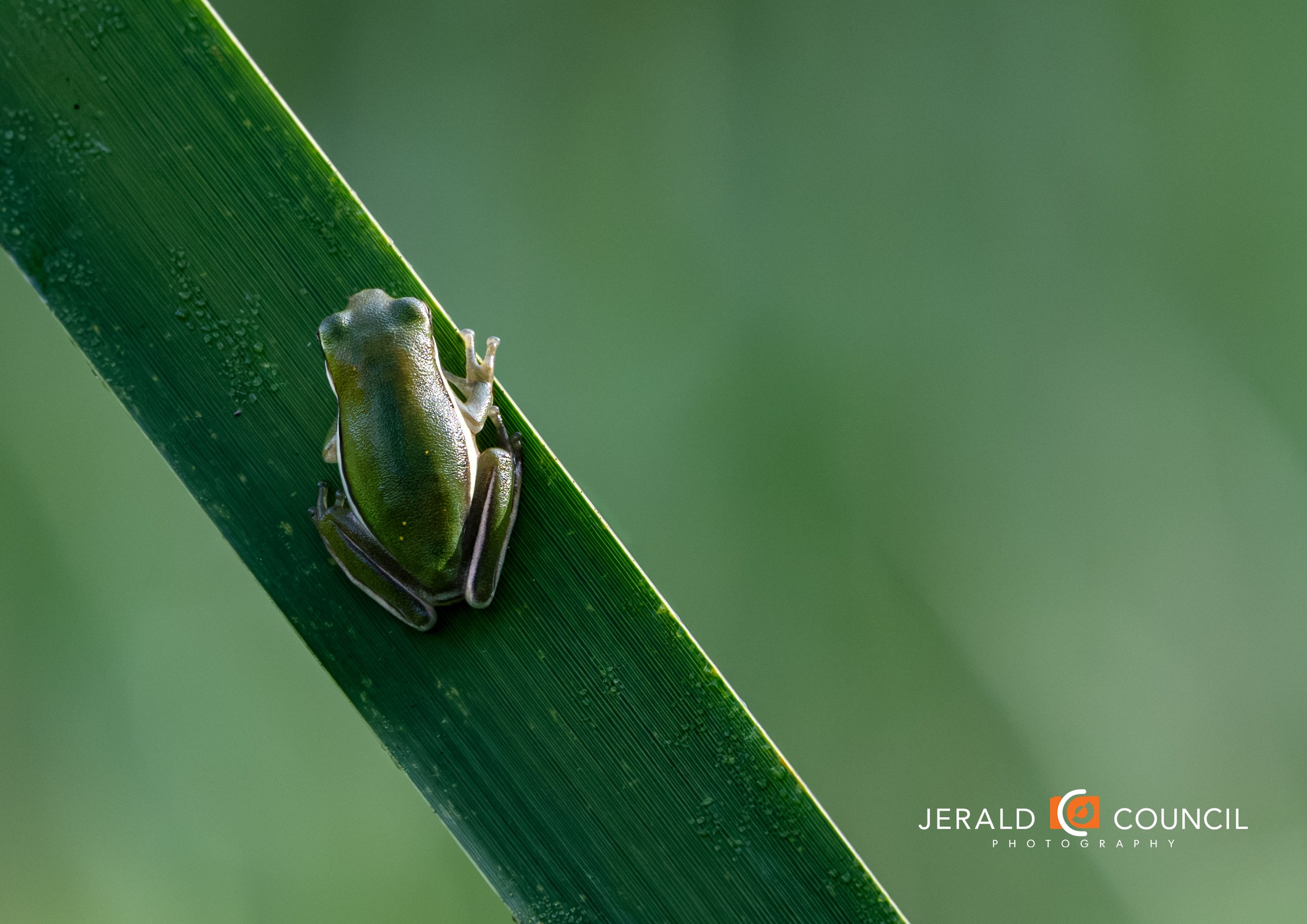
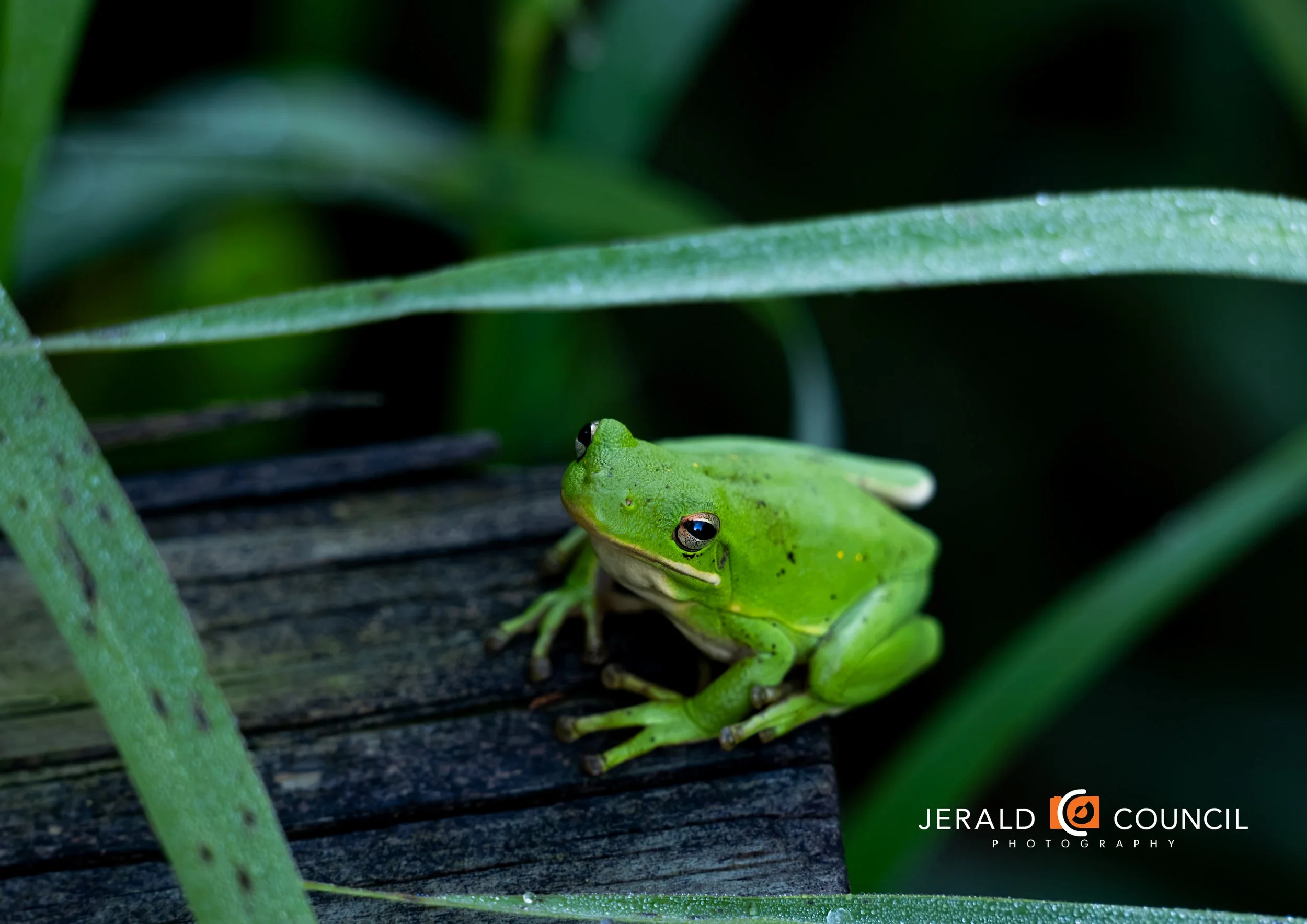
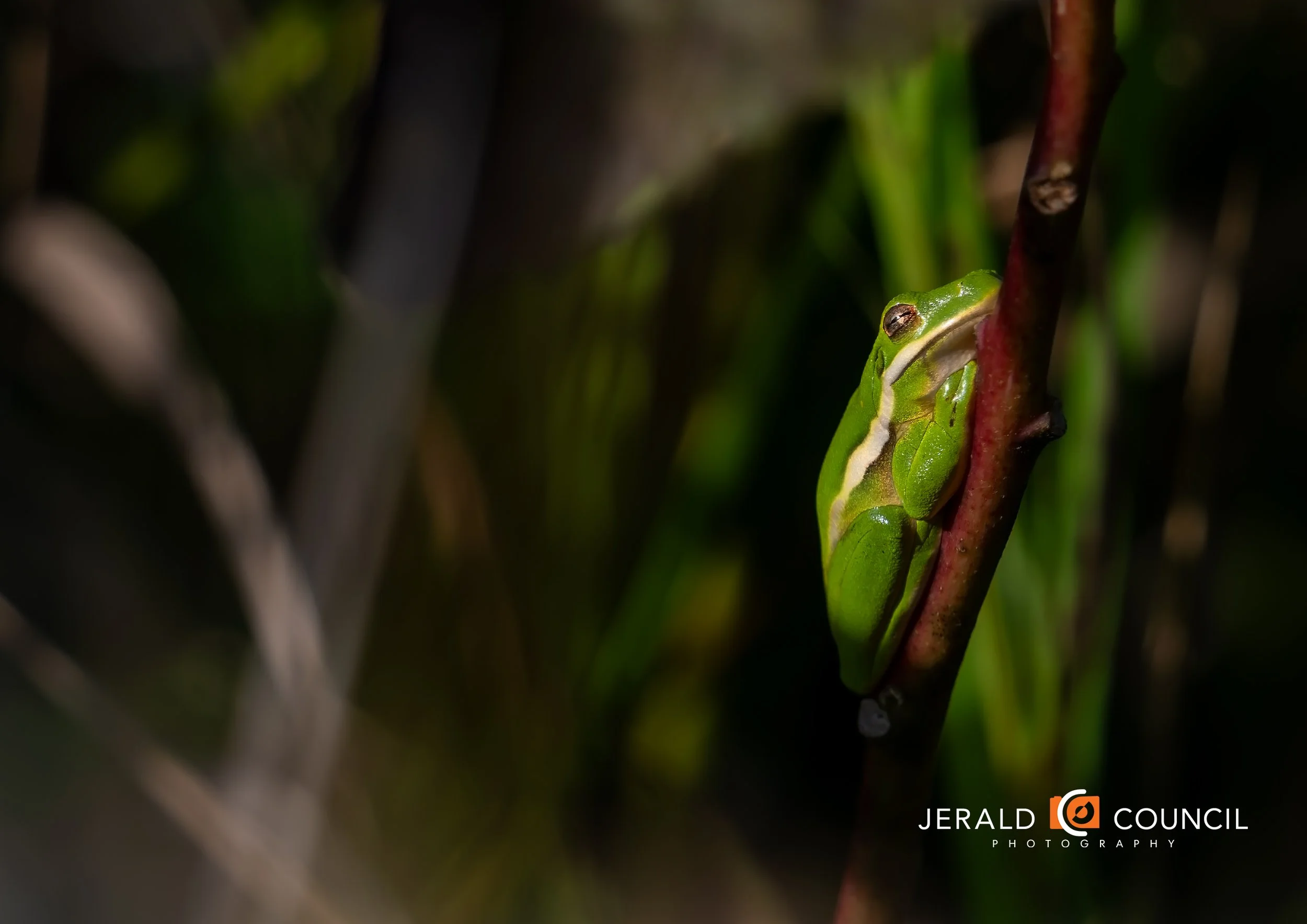
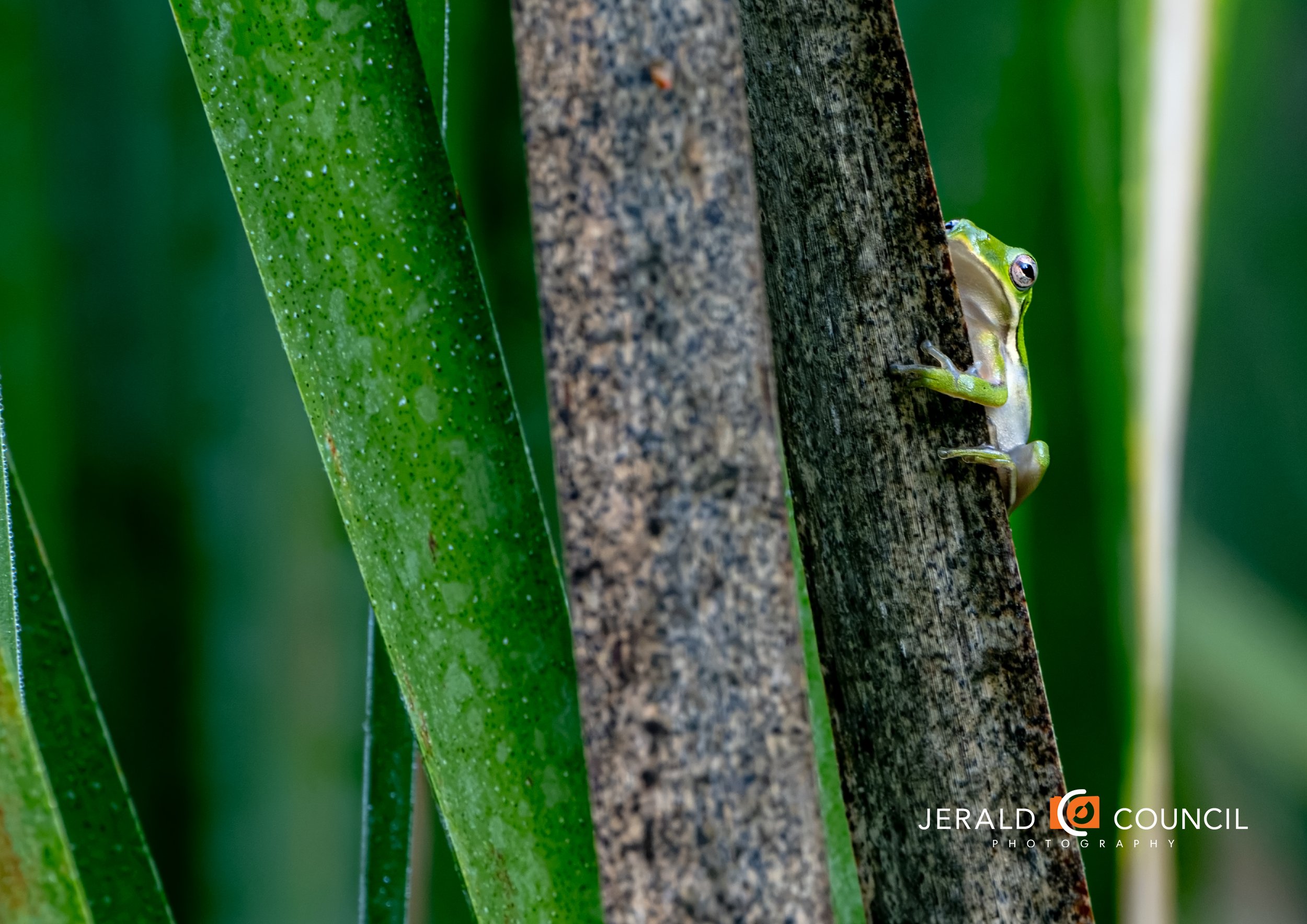
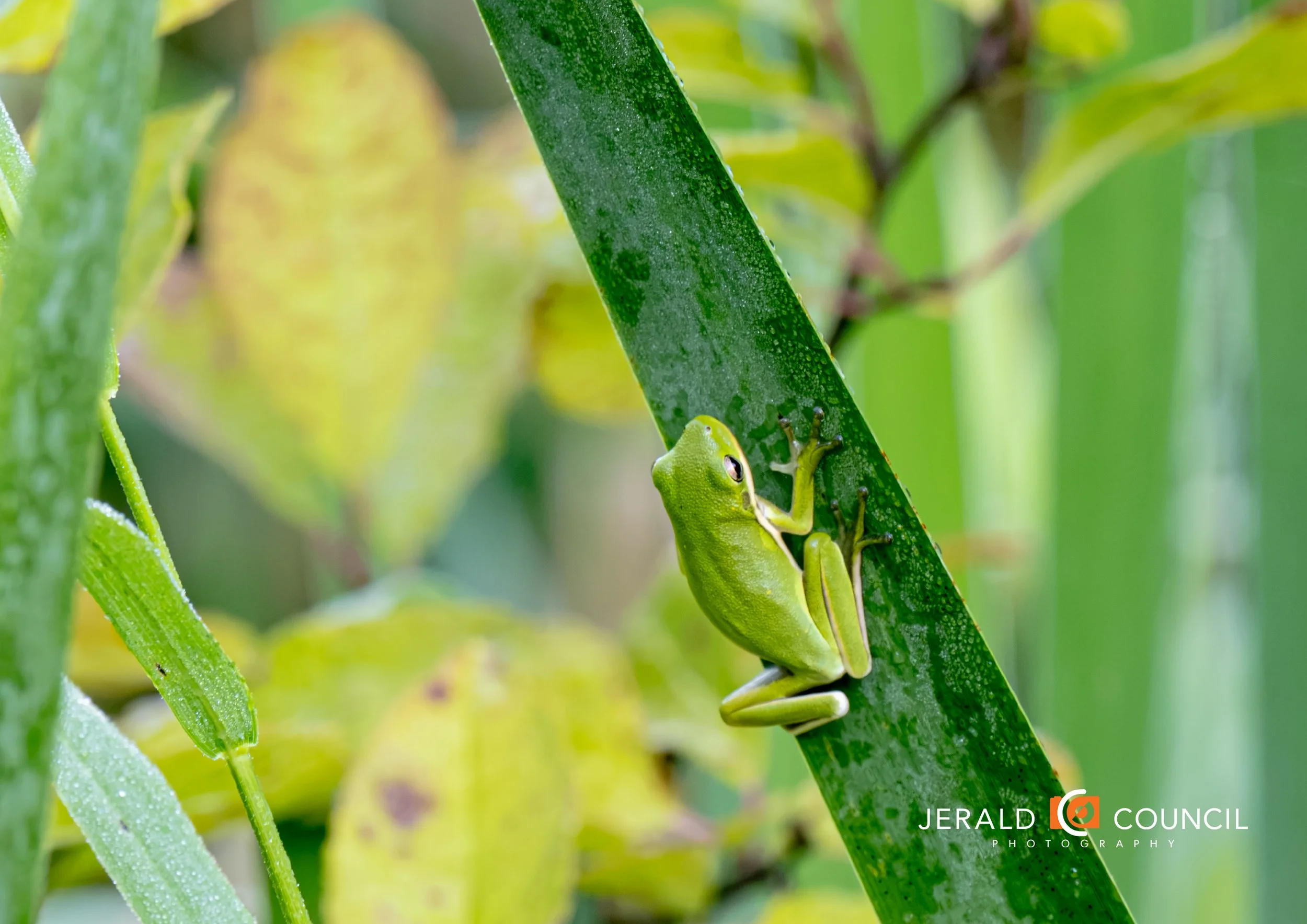
To stay safe, they press their bodies flat against blades of grass or green leaves, avoiding shadows and becoming almost invisible to predators. According to A-Z Animals.com, predators and natural enemies of green tree frogs include snakes, birds, large fish and domestic pets, including cats and dogs.
A green tree frog camouflaged at Huntley Meadows Park in Virginia.
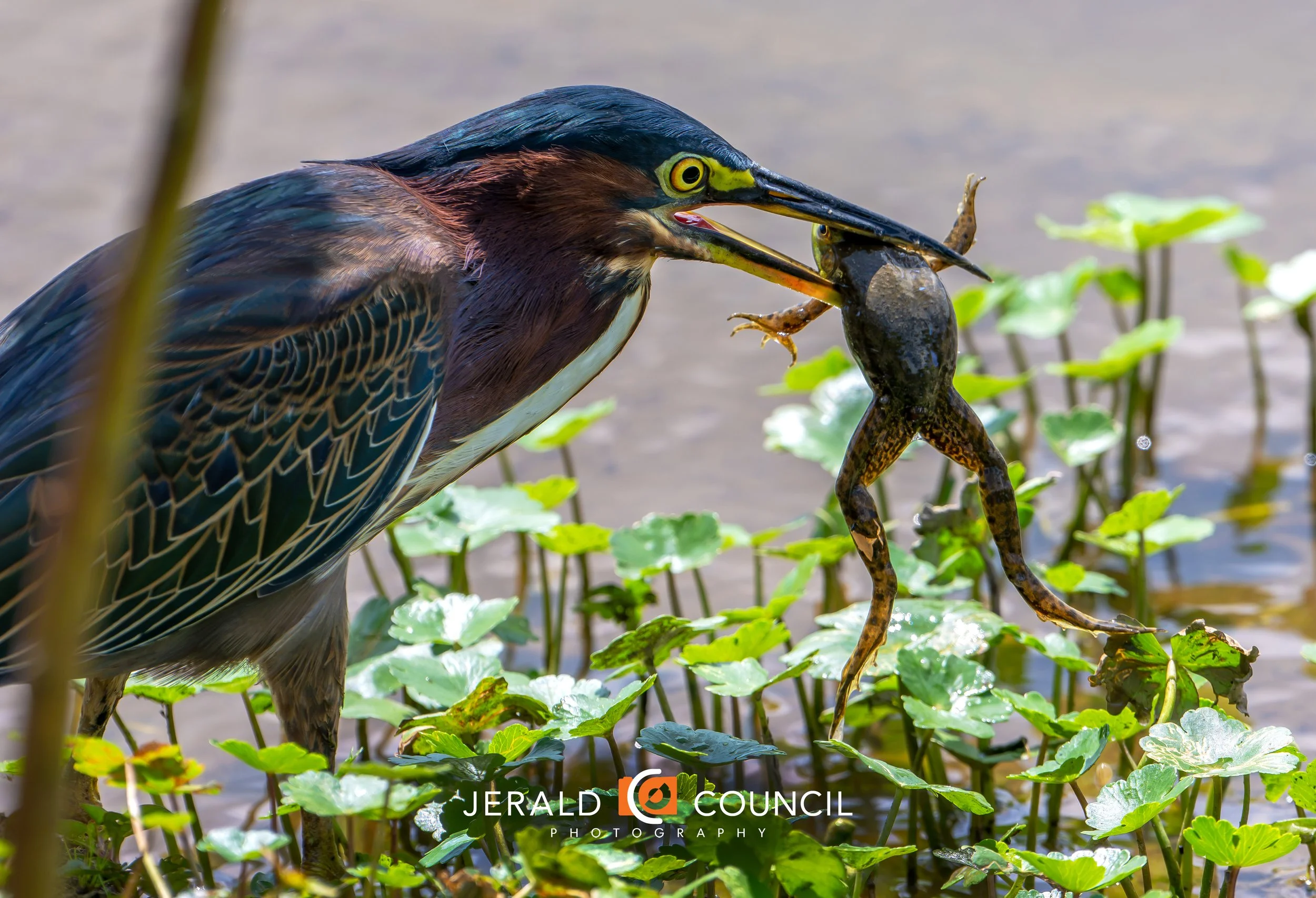
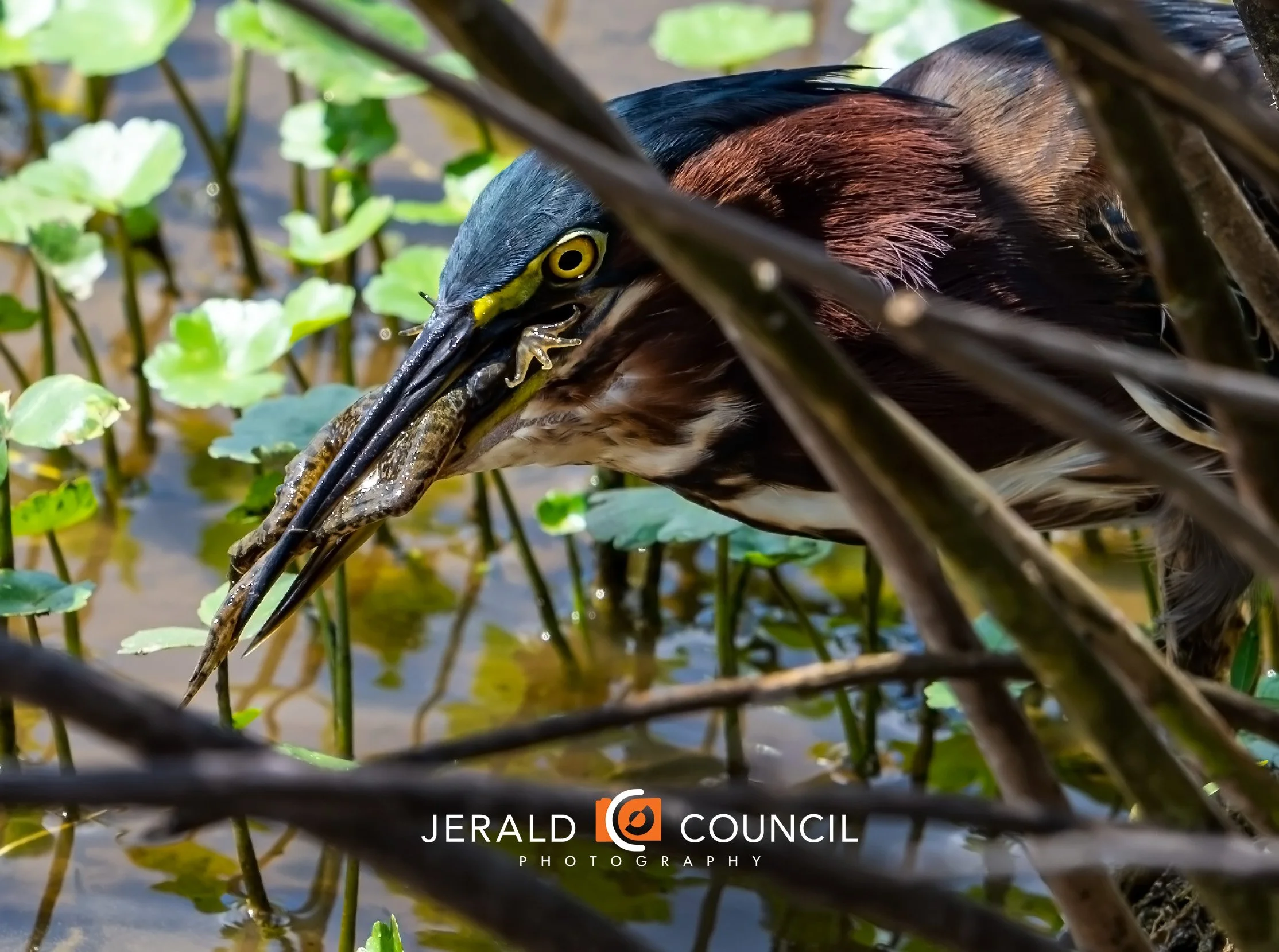
I had the fortunate opportunity to observe and photograph a Green Heron as it captured its prey. It struggled with a frog for approximately 10 minutes before ingesting it entirely.
As I mentioned earlier, blue tree frogs are quite rare. I was at the right place at the right time and was lucky enough to photograph this creature. As Bluey gained instant fame at Huntley Meadows Park, experts note that the Washington, D.C. area seems to be an unexpected hotspot for these blue frogs. Still, I hope Bluey returns for another appearance.